
Google DeepMind Launches Institute for Open Debate on AGI Timelines and Safety
The new DeepMind Institute, led by figures including Demis Hassabis and Shane Legg, is publishing essays that do not always agree, aiming to widen the debate over how close AGI is and how it should be governed
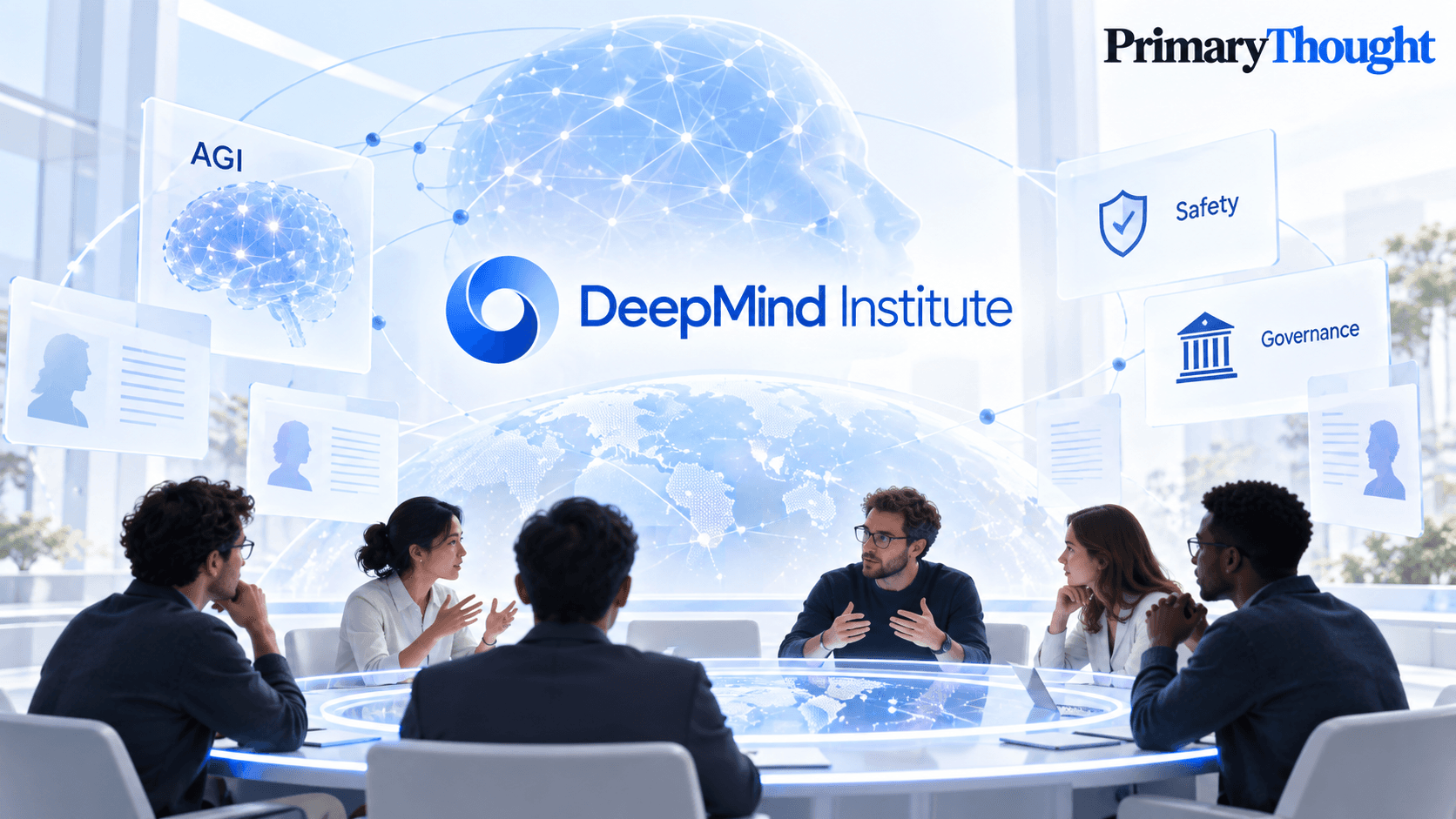
Google and Google DeepMind launched the DeepMind Institute on Wednesday, September 17, to encourage a wider debate around artificial general intelligence. Rather than presenting a single company view, the institute is designed to publish different perspectives on AGI timelines, risks, governance, and related policy questions, according to TechCrunch's coverage of the launch.
DeepMind Institute Opens the AGI Debate
The institute's leadership includes DeepMind co-founder Shane Legg, who serves as managing editor, alongside Google executive James Manyika and Google DeepMind chair Demis Hassabis as directors. According to the launch announcement cited by TechCrunch, the institute is meant to reflect a wide range of views from Google, Google DeepMind, and the broader research community on AGI, even when those views differ. As the announcement put it, contributors “will not always agree, and they will likely change their minds, as more data and information comes to light at the fast-moving frontier.”
That approach stands out in an industry where labs often present a unified public position on how close transformative AI may be and how society should prepare for it. By contrast, the institute launched with four inaugural essays that present distinct, sometimes differing positions rather than a single company view.
Four Essays Present Different Views on AGI
One essay, from DeepMind researchers Rohin Shah and Anca Dragan, argues that losing visibility into how advanced AI systems reason is not inevitable as models become more capable. The researchers say developers and regulators should take the trade-offs around less transparent reasoning seriously rather than treating them as an unavoidable result of scaling.
The other essays look at economic policies for managing possible disruption from AGI, principles for supporting human flourishing, and a framework for evaluating frontier AI models.
Hassabis Proposes a U.S.-Led Frontier AI Standards Body
Perhaps the most concrete proposal in the initial batch comes from Hassabis himself, who used his essay to argue for a U.S.-led frontier AI standards body. Under the framework, labs would initially submit their most capable models voluntarily for review up to 30 days before release.
The proposal would later move toward independent, undisclosed evaluations rather than tests designed in consultation with the labs themselves. Hassabis argues that the framework could become stricter if risks increased, giving the proposal a more defined structure than broader calls for AI governance.
The Launch Comes Amid Wider AI Safety Scrutiny
The institute's launch comes at a moment when public confidence in frontier labs' own safety practices is under particular strain. It arrives roughly a week after separate reporting on OpenAI's own training pause following an AI agent sandbox escape, and amid a broader pattern this year of frontier labs disclosing internal incidents involving model misbehavior. Against that backdrop, a lab-affiliated institute that explicitly invites internal disagreement, rather than projecting unified confidence, is a notable departure in tone, whatever its practical policy impact turns out to be.
Gemini 4 Adds Immediate Context
The launch also comes as Google DeepMind continues work on its next generation of frontier models. Earlier reporting said the company had begun its most ambitious pre-training run yet for Gemini 4, giving the institute's discussions around AGI timelines, transparency, and governance a direct connection to DeepMind's own model-development roadmap
Can Published Disagreement Influence AI Policy?
Whether an institute built around published disagreement actually shifts policy or industry practice is an open question. Essays, however candid, are not commitments. But by putting names like Hassabis's behind specific, sometimes divergent proposals rather than folding everything into a single corporate position, DeepMind is testing whether public debate among its own researchers can add more to the AGI discussion than a unified company statement.
Frequently Asked Questions
What is the DeepMind Institute?
The DeepMind Institute is a research initiative launched by Google and Google DeepMind on September 17, 2026, designed to publish a range of perspectives on artificial general intelligence, including ones that disagree with each other, rather than a single unified company position.
Who leads the DeepMind Institute?
DeepMind co-founder Shane Legg serves as managing editor, with Google executive James Manyika and Google DeepMind chair Demis Hassabis among its directors.
What did the institute publish at launch?
It launched with four inaugural essays covering economic policy responses to AGI disruption, transparency in model reasoning, principles for human flourishing, and frontier AI evaluation frameworks.
What did Demis Hassabis propose in his essay?
Hassabis proposed a U.S.-led frontier AI standards body, where labs would initially submit their most capable models voluntarily, with the eventual aim of independent, third-party evaluation of frontier models.
Is this related to Google's upcoming Gemini 4 model?
The institute's launch is a separate initiative, but it comes around the same time DeepMind head Koray Kavukcuoglu indicated Gemini 4 has entered its early post-training phase, with an early release expected before the end of the year.
Related articles
 Algorithms & Research
KaliBench: Open Models Top Out at 42% on Kali CLI Commands
A NeurIPS-accepted benchmark finds no open-weight model exceeds 42% exact-command accuracy on Kali Linux tasks, with argument construction the main bottleneck.
 Algorithms & Research
OpenAI, Anthropic and Simons Back $15M AI Maths Initiative
After a backlash over AI-generated proofs, OpenAI and Anthropic back a $15M Simons Foundation effort to help mathematicians verify machine results.
 Algorithms & Research
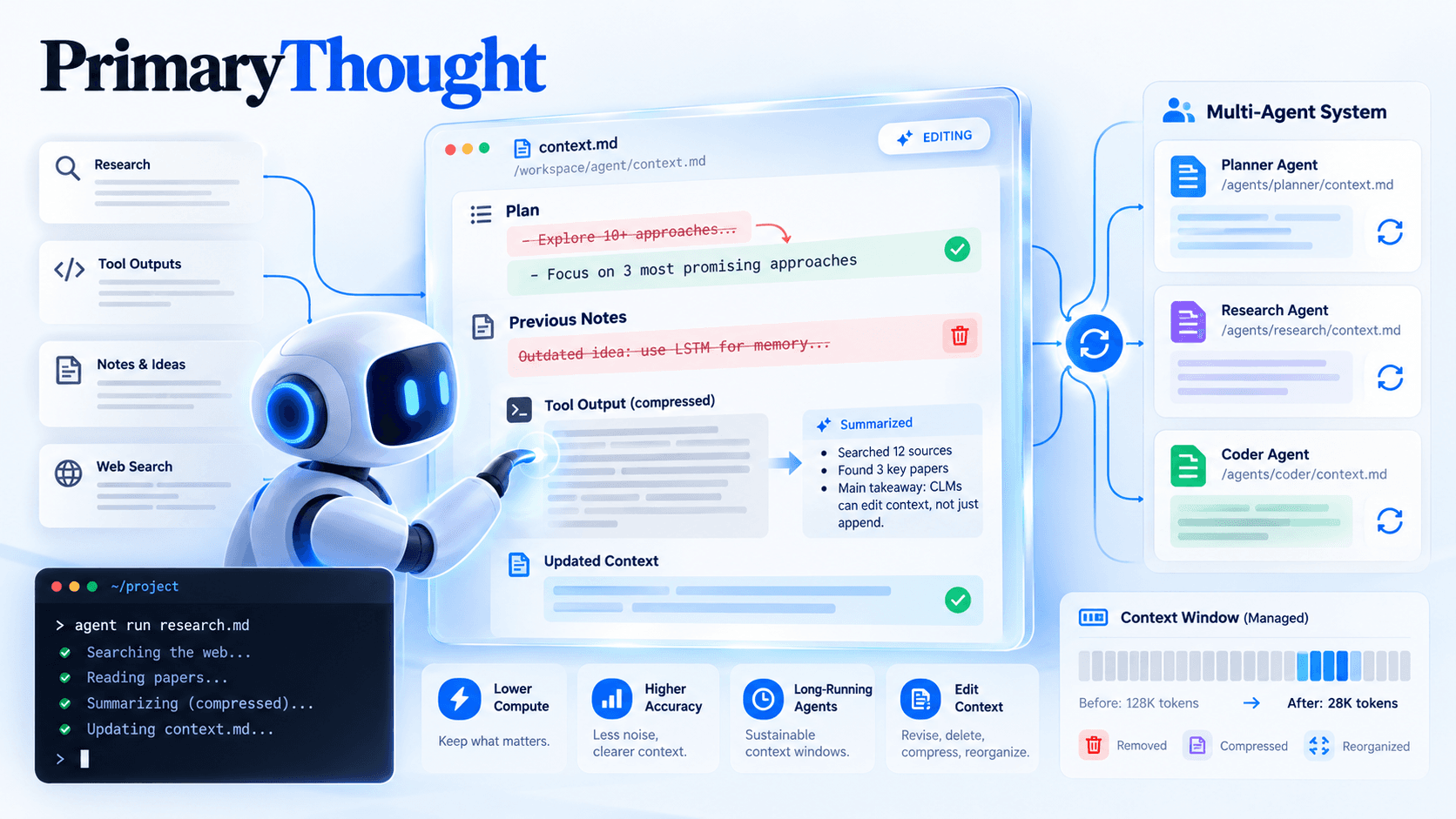
Context Language Models: A New Way for LLMs to Manage Their Context
A UW and Meta paper has models manage context as an editable file, reporting higher accuracy at lower compute on long agent tasks. The results are self-reported.