
Workday and Meta Suits Test Algorithmic Bias in HR Decisions
Mobley v. Workday heads toward class certification while 26 Meta employees allege AI-assisted metrics skewed layoffs. What HR teams should take from both.

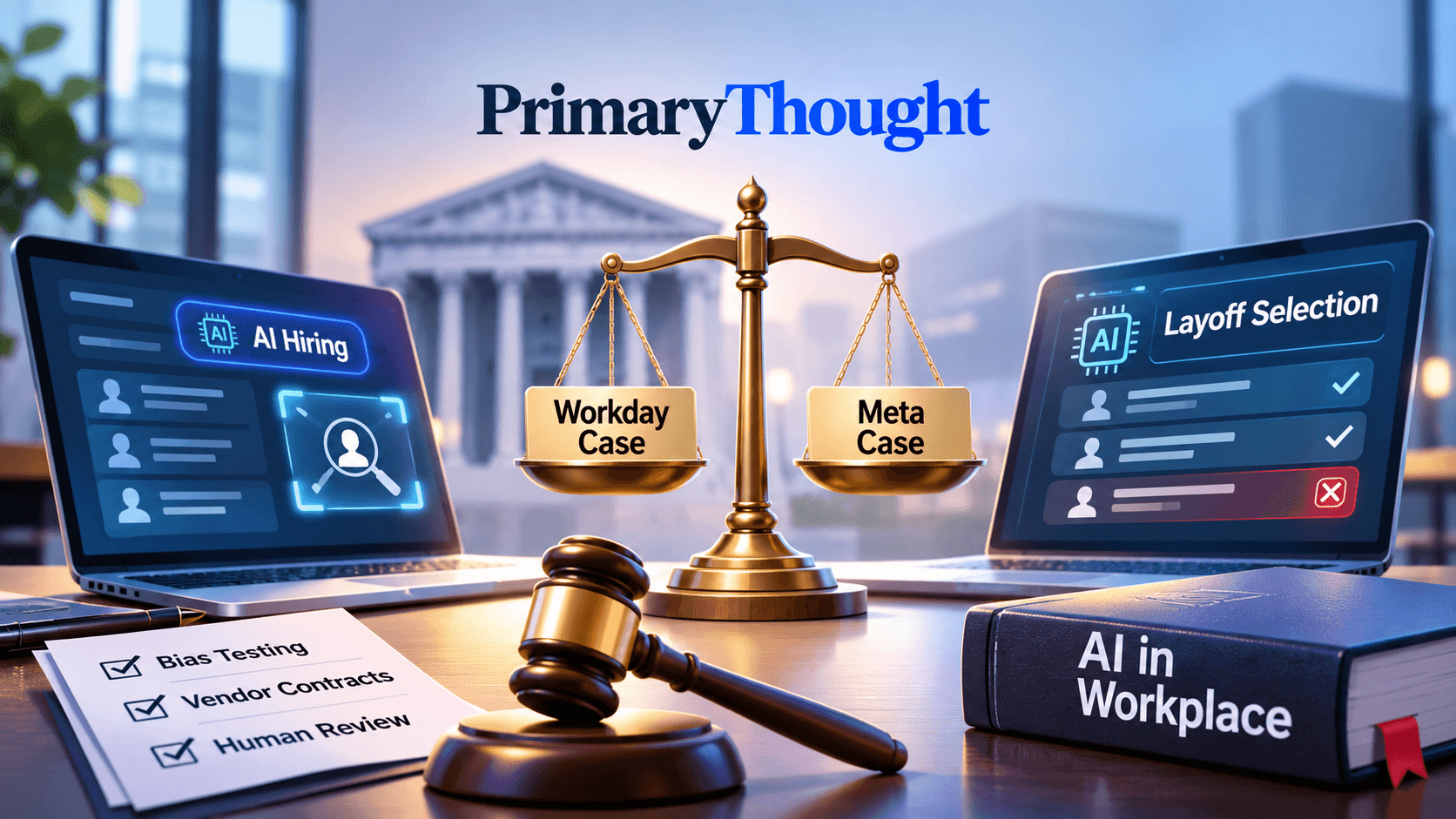
Two pieces of US litigation are shaping how employers think about algorithmic decisions in the workplace. In one, Mobley v. Workday, a federal court has allowed claims that an AI hiring vendor can be liable as its customers' agent, with key class-certification dates falling in the coming weeks. In the other, 26 current and former Meta employees allege that AI-assisted metrics skewed layoff selection against workers on protected leave. Neither case has produced a finding of liability, but together they signal where legal risk for HR teams is concentrating.
Mobley v. Workday: where the case stands
According to a docket-based summary updated October 25, 2026, Mobley v. Workday (N.D. Cal., Judge Rita Lin) began with applicants challenging Workday's AI screening tools. On July 12, 2024, the court let disparate-impact claims proceed on the theory that a third-party agent can be liable as an employer when it performs functions traditionally done by employers. Intentional-discrimination claims and an "employment agency" theory were dismissed. On May 16, 2025, the court preliminarily certified a nationwide age-discrimination collective of applicants aged 40 and over who were denied employment through Workday's platform since September 24, 2020, and Workday can still seek decertification.
A Vital Law analysis adds that Workday estimated about 1.1 billion applications were rejected through its tools in the relevant period, and describes two 2026 rulings. On May 29, the court denied a motion to compel Workday's bias-testing data, holding that attorney-client privilege applied because counsel directed the testing and used the results to advise the company. On June 22, the court declined to dismiss most remaining claims: California's FEHA can reach non-California applicants because Workday designs and maintains the tools in California, and an ADA claim may proceed based on screening that uses proxies for disability, such as patterns tied to medical leave or treatment. A race-based disparate-impact claim was dismissed on procedural grounds.
The calendar matters. The docket summary says plaintiffs moved for class certification on September 14, 2026; Workday's opposition is due November 10, opt-in discovery responses are due by November 30, and a hearing is set for March 9, 2027. The summary is explicit that no court has found Workday liable; the case is at the class-certification and discovery stage.
The Meta layoff suit
The second case moves the question from hiring to firing. Vital Law reports that on July 13, 2026, 26 anonymous current and former Meta employees sued in federal court in Oakland (Does 1-26 v. Meta Platforms). They allege Meta used AI systems to select employees for layoff in a way that discriminated against workers with disabilities, workers on protected medical or family leave, and pregnant employees. Meta announced in May that it would cut about 8,000 jobs, with terminations starting July 22.
The legal theory is disparate impact by proxy. Plaintiffs say metrics such as keystroke and activity data, AI token-usage dashboards and algorithm-assisted rankings penalize the inactivity that leave or disability can cause. Vital Law notes the complaint does not claim Meta fed medical data into the system. Claims rest on the FMLA, ADA, Pregnancy Discrimination Act and Pregnant Workers Fairness Act, California's FEHA, and leave or civil-rights laws in several other jurisdictions, and plaintiffs also allege Meta failed to bias-test its systems as California and New York City laws require. They sought a preliminary injunction halting the layoffs while claims go to individual arbitration. A headline on the Vital Law page reports that the court denied the employees' bid for a temporary restraining order; that detail should be confirmed against the docket. Meta denies the allegations, saying workforce decisions were made by people rather than AI, according to the same analysis.
Why the two cases belong together
Both cases test whether an algorithmic score that looks neutral can create liability when it correlates with protected characteristics. The Workday court has allowed proxy-style reasoning on disability to proceed at the pleading stage, and the Meta complaint uses a similar logic about activity metrics and leave. Allegations are not findings, and the Meta suit in particular is at an early stage.
They also show that using a vendor's tool does not insulate an employer. Vital Law's takeaways for employers include that disparate impact remains viable in private suits and under state law even though federal agencies have deprioritized it, that productivity and activity metrics can act as proxies for protected status, and that vendor contracts should address audit rights, bias-testing documentation, and indemnification. Because the Workday privilege ruling treated counsel-directed testing as protected, the analysis suggests testing structured through counsel may stay privileged while routine internal testing may not.
Practical implications for HR teams
Test for leave-driven effects. If any metric used in performance ranking or layoff selection falls when someone takes protected leave, check whether it produces adverse impact before it is relied on.
Document human review. Vital Law recommends recording where human judgment departed from a tool's output, which supports the argument that decisions were not delegated to software.
Revisit vendor contracts. Audit rights, access to bias-testing documentation, and indemnification are now negotiating points, not extras.
Expect discovery to reach employers. The Workday case shows litigation steps that can pull in customer data and records, not just the vendor's.
A third case to track: Eightfold
The docket summary also covers Kistler v. Eightfold AI, in which applicants allege violations of the Fair Credit Reporting Act, California's Investigative Consumer Reporting Agencies Act and its Unfair Competition Law. The core question is whether Eightfold acts as a consumer reporting agency. The case was filed in California state court on January 20, 2026, and removed to federal court on March 2. Eightfold moved to dismiss on April 20, and the summary reports no ruling as of October 2026, while noting an inconsistency about a vacated hearing date that should be checked against the docket.
What to watch next
Near-term, Workday's November 10 opposition to class certification will show how it intends to contest the collective's scope, and the March 2027 hearing will decide whether a broader class proceeds. In the Meta case, the next procedural steps will determine whether the claims reach arbitration or a court. For HR leaders, the safest reading is that these disputes are unresolved, but they have already moved the discussion from whether AI hiring tools carry legal risk to how that risk is allocated between employers and vendors. Both sources reviewed here are secondary legal commentary rather than court filings, so teams relying on specifics should consult the dockets directly.
Frequently Asked Questions
Has Workday been found liable in Mobley v. Workday?
No. According to a docket summary updated October 25, 2026, no court has found Workday liable; the case is at class-certification and discovery stages.
What do the Meta plaintiffs allege?
That AI-assisted metrics used in layoff selection penalized inactivity linked to disability, protected leave or pregnancy. Meta denies this, saying people made the decisions.
When are the next Workday dates?
Workday's class-certification opposition is due November 10, 2026, opt-in discovery responses by November 30, and a hearing is set for March 9, 2027.
Related articles
 Workforce & HR AI
Connecticut: AI Tools No Longer a Defence in Bias Claims
Since October 1, Connecticut employers cannot cite automated decision tools as a defence to discrimination claims. Notice duties follow in 2027.
 Workforce & HR AI
California's No Robo Bosses Act: What HR Teams Must Know
California's SB 947, signed September 30, requires human corroboration when automated systems drive discipline or firing, effective July 1, 2027.